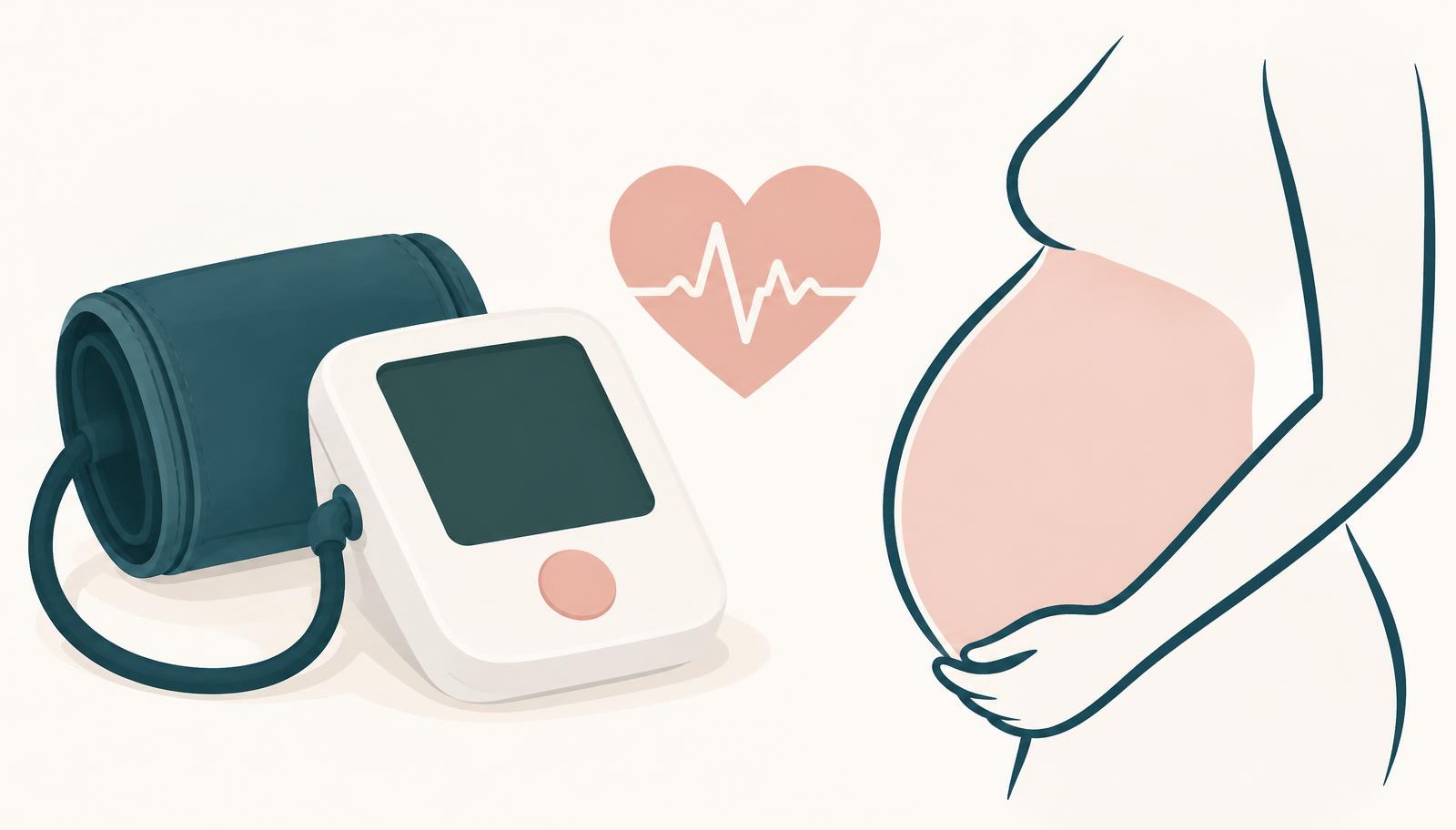
Having your blood pressure checked is one of the simplest parts of an antenatal visit, yet it is also one of the most important. Blood pressure is the force of blood pushing against the walls of your blood vessels. During pregnancy your body makes more blood and your heart works harder, so keeping an eye on blood pressure helps protect both you and your baby.
High blood pressure can develop during pregnancy even in women whose blood pressure was always normal before. It often causes no symptoms at first, which is why regular checks matter. Just as importantly, knowing the warning signs of more serious problems helps you seek help early, when care is most effective.
Understanding high blood pressure during pregnancy
Blood pressure is generally considered high in pregnancy when the top number (systolic) is 140 mm Hg or higher and/or the bottom number (diastolic) is 90 mm Hg or higher. Doctors usually describe three main types.
Chronic hypertension
Chronic hypertension is high blood pressure that was present before pregnancy, or that is first found before 20 weeks of pregnancy. A woman who was taking blood pressure medicine before pregnancy is considered to have chronic hypertension even if her readings are currently normal. Women with chronic hypertension have a higher chance of developing pre-eclampsia, so they are usually monitored more closely.
Gestational hypertension
Gestational hypertension is high blood pressure that appears for the first time after 20 weeks of pregnancy in a woman who previously had normal blood pressure, without the other features of pre-eclampsia described below. Many women have only a mild rise. However, gestational hypertension needs regular monitoring because some women go on to develop pre-eclampsia, and blood pressure can sometimes rise to severe levels.
Pre-eclampsia
Pre-eclampsia is a more serious condition that usually develops after 20 weeks of pregnancy or soon after birth. It involves high blood pressure together with signs that other parts of the body are being affected. These can include the kidneys, liver, brain, blood (for example, a low platelet count) and the placenta, which may affect the baby's growth.
Protein in the urine is a common sign of pre-eclampsia, but it is not always present. Pre-eclampsia can be diagnosed without protein in the urine when high blood pressure occurs alongside other signs, such as abnormal kidney or liver blood tests, a low platelet count, fluid on the lungs, new severe headaches or visual problems. This is why your doctor may arrange blood tests as well as urine tests.
The key difference is this: gestational hypertension is raised blood pressure on its own, while pre-eclampsia is raised blood pressure with evidence that other organs or the placenta are involved. Pre-eclampsia can progress, sometimes quickly, and in rare cases may lead to seizures (eclampsia) or other serious complications. With timely monitoring and care, most women with pre-eclampsia and their babies do well.
Warning signs that should never be ignored
If you are pregnant or have recently given birth and notice any of the following, seek immediate assessment at your maternity unit or nearest emergency department. Do not wait for your next antenatal appointment.
- A severe headache, or a headache that does not go away
- Blurred vision, flashing lights, spots before the eyes or other changes in your vision
- Severe pain in the upper abdomen, especially just below the ribs on the right side
- Breathlessness or difficulty breathing
- A seizure (fit)
- Feeling seriously unwell, or any other sudden symptom that worries you
Other changes, such as sudden swelling of the face, hands or feet, nausea or vomiting in the later part of pregnancy, or noticing your baby moving less than usual, should also be reported to your maternity team promptly. Some swelling of the feet and ankles is common in pregnancy, but sudden or increasing swelling deserves a check.
If you are unsure whether a symptom is serious, it is always safer to contact your maternity team or hospital and be assessed.
Routine monitoring and antenatal care
Why blood pressure is checked at every visit
Because high blood pressure and early pre-eclampsia often cause no symptoms, your blood pressure is measured at antenatal visits throughout pregnancy. Blood pressure naturally varies through the day, so if one reading is high, it may be repeated after you have rested.
Urine and other tests
Your urine may be tested for protein. When blood pressure is raised, your doctor may also recommend blood tests to check your kidney and liver function and your platelet count. Some women are asked to monitor their blood pressure at home as well.
Monitoring your baby
High blood pressure can reduce blood flow to the placenta, which may affect the baby's growth. Depending on your situation, ultrasound scans to check the baby's growth and the amount of fluid around the baby, along with monitoring of the baby's heart rate, may be advised.
Why follow-up differs from woman to woman
There is no single schedule that suits everyone. How often you are seen depends on your blood pressure readings, test results, the type of hypertension, how many weeks pregnant you are, your baby's wellbeing and your medical history. Some women need weekly checks or more frequent reviews, while others continue routine antenatal care.
Management and treatment
Obstetric assessment comes first
Every woman with raised blood pressure in pregnancy needs individual assessment by an obstetrician. This helps decide whether the condition is chronic hypertension, gestational hypertension or pre-eclampsia, and how closely you and your baby need to be monitored.
Closer monitoring or hospital care
Some women can be followed up as outpatients with regular checks. Others, particularly those with severe blood pressure or signs of pre-eclampsia, may need assessment or admission to hospital so that both mother and baby can be watched closely.
Medication decisions are individual
Some women need medicine to control their blood pressure during pregnancy. The choice of medicine, and whether medicine is needed at all, depends on your blood pressure readings and overall health. Some blood pressure medicines are not recommended in pregnancy, while others are commonly used. Only your treating doctor can decide what is suitable for you.
Should I stop my blood pressure medicine if I become pregnant?
No. Do not stop, reduce or change any prescribed blood pressure medicine on your own. Stopping suddenly can allow your blood pressure to rise. If you are planning a pregnancy or find out you are pregnant while taking blood pressure medicine, contact your doctor promptly so your treatment can be reviewed and, if needed, changed to one suitable for pregnancy.
Timing of delivery
Delivery of the baby and placenta is the only way to end pre-eclampsia. When birth is advised depends on how severe the condition is, the health of the mother and baby, and how many weeks pregnant you are. In some situations, an earlier birth may be recommended. Your obstetrician will discuss the options and reasons with you.
Blood pressure can stay high or even rise after birth, and pre-eclampsia can occasionally appear for the first time after delivery. Continue to watch for warning signs in the days and weeks after your baby is born.
When to seek medical help
Routine antenatal monitoring
Attend all your scheduled antenatal visits, even if you feel well, so that your blood pressure and urine can be checked. If you have been asked to check your blood pressure at home, follow the plan your doctor has given you.
Contact your maternity team promptly
Call your doctor or maternity team the same day if you have new or increasing swelling of the face, hands or feet, a home blood pressure reading above the level your doctor told you to report, a mild headache that is unusual for you, or if you notice your baby moving less than usual.
Seek immediate maternity or emergency assessment
Go to your maternity unit or the nearest emergency department straight away if you have a severe or persistent headache, vision changes, severe pain below the ribs, breathlessness, a seizure, or you feel seriously unwell. These symptoms need urgent assessment, whatever the time of day.
Conclusion
High blood pressure during pregnancy is common and, with good antenatal care, can usually be managed safely. Regular blood pressure checks, knowing the warning signs and seeking timely medical assessment are the most important steps you can take. If you have questions about your blood pressure during pregnancy, our Pregnancy Care and High-Risk Pregnancy services listed below can help, and you can contact the clinic to arrange a consultation.
Frequently asked questions
Can high blood pressure affect pregnancy?
Yes. High blood pressure can place extra strain on the mother's heart and kidneys and may reduce blood flow to the placenta, which can affect the baby's growth. It also increases the chance of pre-eclampsia. With regular monitoring and appropriate care, most women with high blood pressure have healthy pregnancies.
What is pre-eclampsia?
Pre-eclampsia is a pregnancy condition that usually develops after 20 weeks or soon after birth. It involves high blood pressure together with signs that other organs, such as the kidneys, liver, brain or placenta, are affected. Protein in the urine is common but is not always present.
Which symptoms of high blood pressure during pregnancy need urgent attention?
A severe or persistent headache, blurred vision or flashing lights, severe pain below the ribs, breathlessness, a seizure, or feeling seriously unwell all need immediate assessment at a maternity unit or emergency department. Do not wait for your next appointment.
How is blood pressure monitored during pregnancy?
Blood pressure is measured at antenatal visits, and urine may be tested for protein. If blood pressure is raised, blood tests, home blood pressure checks and scans to monitor the baby may be advised. How often you are checked depends on your individual situation.
Should I stop my prescribed blood pressure medicine if I become pregnant?
No. Do not stop or change your medicine on your own, as this can cause your blood pressure to rise. Contact your doctor promptly so your treatment can be reviewed and, if needed, changed to a medicine suitable for pregnancy.
Medical References
- American College of Obstetricians and Gynecologists (ACOG). Preeclampsia and High Blood Pressure During Pregnancy.
- NHS. Pre-eclampsia.
- World Health Organization (WHO). Pre-eclampsia fact sheet.
- National Institute for Health and Care Excellence (NICE). Hypertension in pregnancy: diagnosis and management (NG133).
Related services
Pregnancy Care
Nurturing you and your baby through every trimester with warmth and precision.
High Risk Pregnancy
Advanced, evidence-based care for pregnancies that need extra attention.More from the Journal



About Dr. Kalyani Chavan
Consultant Obstetrician & Gynecologist · MBBS, DGO, FCPS, DFP, AFIH · 20+ years
Dr. Kalyani Chavan is a Consultant Obstetrician & Gynecologist with over 20 years of experience in women's health. Her clinical practice focuses on pregnancy and maternity care, gynecological conditions, PCOS, fertility concerns and women's health across different stages of life.
Meet Dr. Kalyani ChavanMedical Disclaimer
The information in this article is provided for general educational purposes and is not a substitute for individual medical advice, diagnosis or treatment. Every woman's health needs are different. If you have symptoms, are pregnant, are planning pregnancy, or have a medical concern, please consult a qualified healthcare professional for advice specific to you. In an emergency, seek immediate medical care.